How I use multi-agent collaboration
Small tasks: one assistant is enough. App work with many roles taking turns: I now prefer a squad, each with its own chat.
Ways I’ve used agents
I’ve tried the common patterns.
Sometimes one window end to end. Sometimes I keep loading skills and tools onto the same assistant, hoping it becomes omniscient. Scripts, copy, one-off errors—that’s great, less switching.
Other work needs a different move.
Especially apps. Many nodes, mixed roles—stuffing one assistant makes the build drift. Then I want multi-agent.
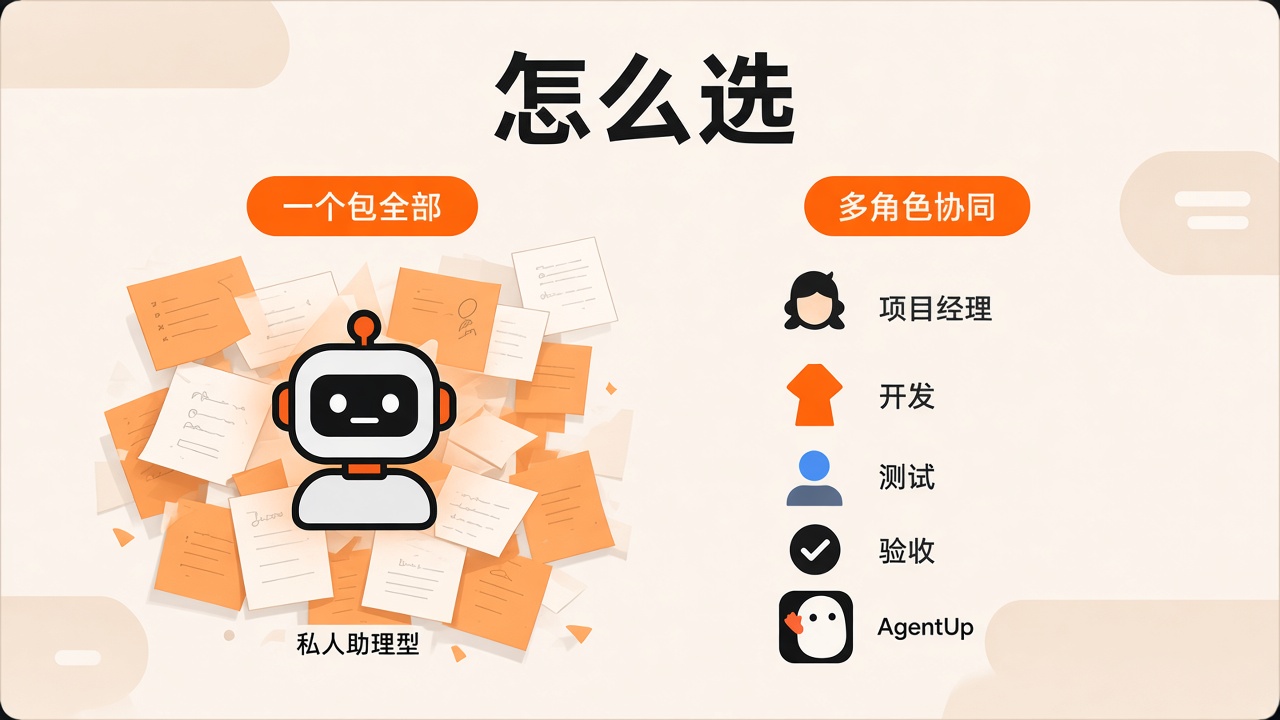
For apps, I want a squad
Shipping an app is rarely “one brain answers one sentence.”
It’s a pipeline. Someone owns scope and priority, someone implements, someone finds regressions, someone accepts. Nodes differ; judgment criteria differ. PM thinks milestones; eng thinks interfaces; test thinks edges; acceptance only cares if this cut can ship.
Dump that into one assistant and the transcript becomes a junk drawer. Next you only ask to clarify a login error string—and it drags test cases or scheduling debate back in.
My default roster:
- PM: break work, schedule nodes, guard scope
- Engineering: implement and change code
- Testing: find issues, write repros, watch regressions
- Acceptance: check against the goal
Add a design agent when art volume is real. Otherwise keep the squad lean.
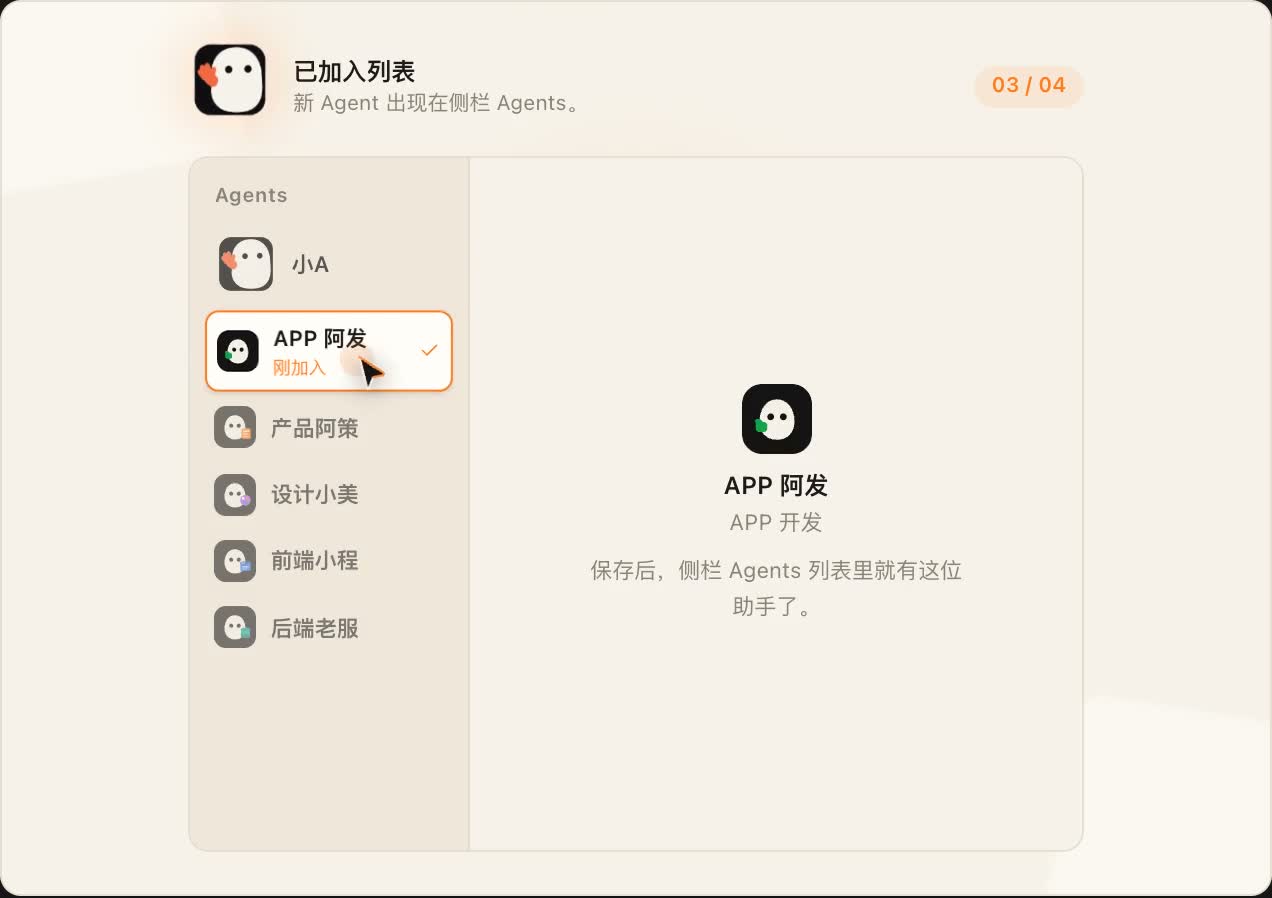
More windows aren’t enough. Each agent should keep workspace and skills separate. Engineering shouldn’t memorize acceptance scripts; testing shouldn’t get pulled by half-finished product debates. Builds feel steadier: ownership is clear, rework argues less.
When multi-agent is worth it
Most days I still use a single assistant. That’s often correct.
Homogeneous short tasks with clean context: splitting only taxes switching. Copy edits, one API question, one isolated error—one assistant is faster.
I seriously consider multi-agent when several of these stack:
- Roles are far apart; judgment criteria differ
- Contexts pollute each other; A’s details skew B
- Handoff or parallelism: eng finishes, test picks up
- Long-term buckets: same kind of work returns to the same person with retained skills
Apps hit almost all of these. Weekly reports, translation, weather usually don’t.
Counterexample: you’re soloing a prototype through every node—four agents may be ceremony. Squads help when roles truly fork, not because the nouns sound cool.
Third mode: one entry, many entities
Multi-agent doesn’t mean you are the switchboard opening every contact.
I usually: personal lead as entry, specialists behind it.
You tell the entry a goal—“login path acceptance-ready this week.” It pulls eng and test, acceptance if needed. The ones who act still carry clean context.
Don’t confuse:
- Single entry: fewer clicks
- Single context: every role’s memory in one pot
I want fewer clicks, not one pot. Entry can be unified; context stays per entity.
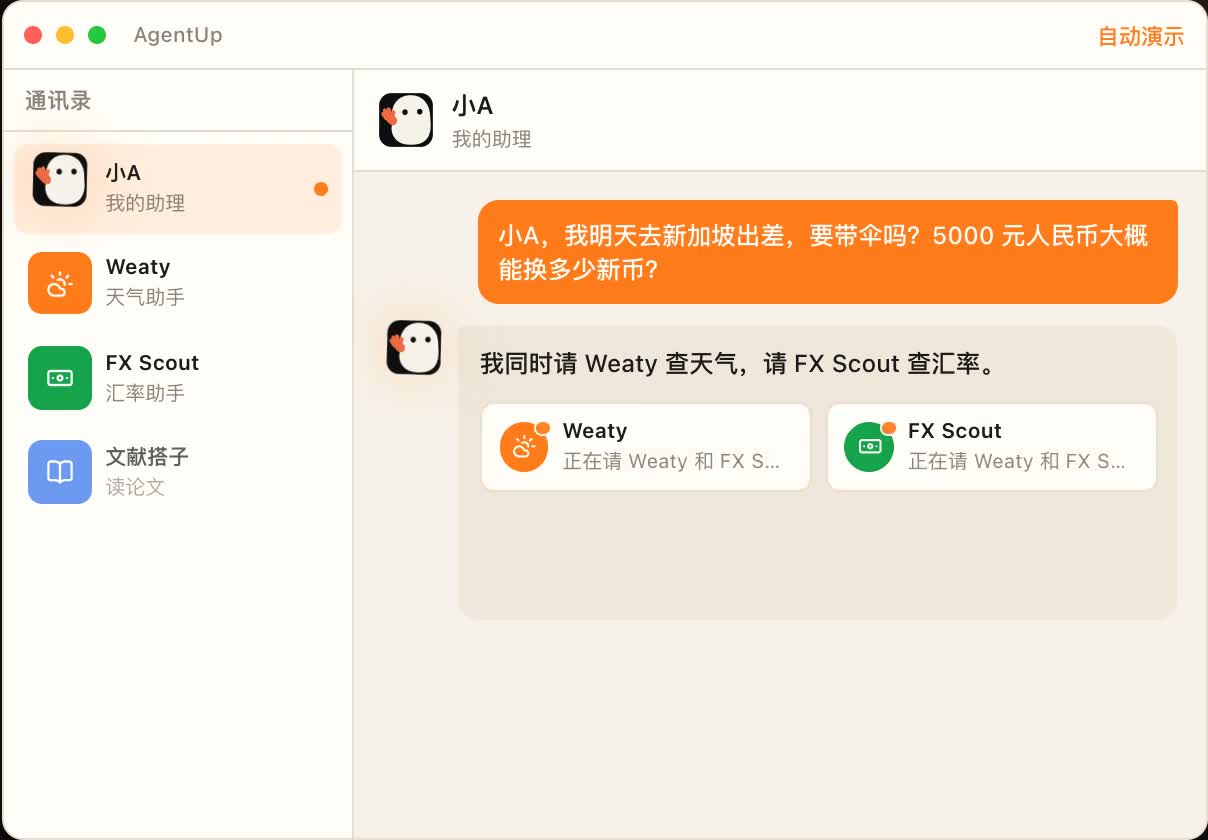
That’s how I use AgentUp: contacts hold both a personal lead and specialists; cross-topic work is dispatched—don’t sew PM, eng, and test brains into one.
Single vs multi: a quick table
| Look at | Prefer single agent | Prefer multi-agent |
|---|---|---|
| Task shape | Homogeneous, short chain | Multi-role, multi-node |
| Context | Already clean | Easy to pollute across nodes |
| Collaboration | One person finishes | Handoff or parallel |
| Memory & skills | Temporary | Keep buckets over time |
| Typical | Copy, API Q, isolated bug | App: PM / eng / test / acceptance |
| Main cost | Drift when roles multiply | Switching/dispatch overhead |
For apps, the right column almost always shows up. For weekly notes or weather, stay left. When you don’t want to open every contact, use a personal lead as entry with specialists behind.
Next app: at least split “implement” and “test” into clean contexts and see if rework drops—that’s the smallest proof.
I’m using AgentUp this way
The selection rule isn’t tied to one product. I built it into AgentUp: add roles like contacts, a personal lead can dispatch, specialists keep workspace and skills. Why an address book: this build log.

I still use a single assistant a lot. For multi-identity, multi-node builds like apps, I switch to a squad. Separate contexts, each does their job—I trust that more.
FAQ
- When should I use multi-agent collaboration instead of one assistant?
- When the work splits into heterogeneous roles and stages, and contexts easily pollute each other—like shipping an app: scoping, coding, testing, acceptance. More roles and parallelism make a kitchen-sink assistant worse.
- How do I usually divide a multi-agent team?
- For apps I use PM, engineering, testing, and acceptance—each with workspace and skills. Add a design agent only when art assets are heavy, so the squad doesn’t inflate for show.
- Do I have to open every agent myself?
- No. The practical third mode: a personal lead as single entry, specialists behind it. You state the goal; it pulls the right roles; each specialist keeps its own context and skill boundary.
- How do I start with multi-agent collaboration?
- Decide whether to split: short homogeneous tasks stay single-assistant. For multi-role app work, split PM / eng / test / acceptance, add design if needed. Use a personal lead as dispatcher; hang skills on the matching role—don’t pile them into one persona.
Try AgentUp on your computer
Download the desktop app, add specialists to your contacts, and team up when the ask spans topics.
Download